THE HOUSE / MATERIALS · THE SAEVIEA JOURNAL
The language of materials
What to notice when choosing textiles, surfaces and objects that will live together in one space.
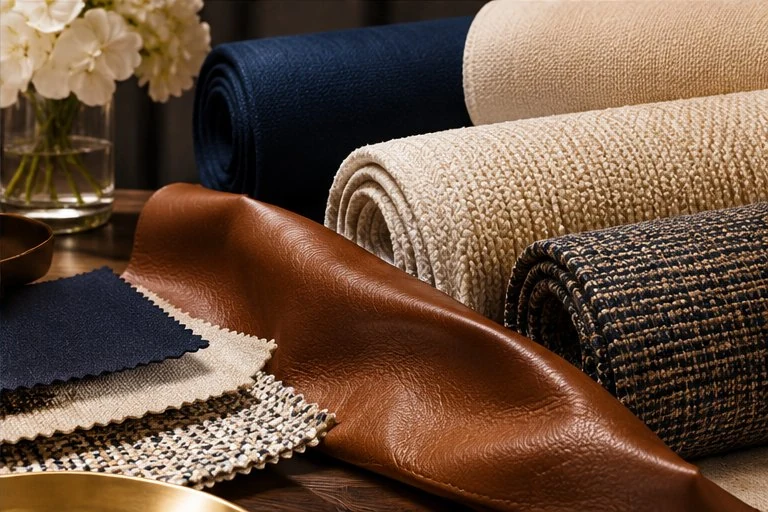
Texture gives a room its rhythm
A space with several materials in the same color can still feel rich when their textures differ. Matte woven cloth absorbs light, polished metal reflects it and grain in wood introduces pattern without a print. The most effective combinations are often based on contrast in surface rather than contrast in color alone.
Begin with the large pieces—floor, wall, upholstery—and work toward smaller objects. Repeating one finish or tone in two or three places can create a useful sense of connection.
Understand the difference between appearance and construction
Natural-looking timber may be solid wood, veneer over a stable substrate or a printed surface. Leather finishes vary, and even items with the same color name may behave differently in sunlight or daily wear. Ask for material composition, finish specification, recommended cleaning method and accurate close-up photographs.
For curtains and soft furnishings, the fiber composition and weave matter alongside width, lining, privacy and the way the fabric hangs. For decorative stone, understand porosity and suitable cleaning products before purchase.
Sample when you can
Room light changes throughout the day. A material that appears cool on a screen may look warmer beside timber or under an amber lamp. When possible, review samples in the actual room at different times.
Before requesting a final quote, prepare sizes, reference photos, intended use, desired finish and a budget range. These make it easier to compare options on their merits.