FASHION / FORM · THE SAEVIEA JOURNAL
How to read a silhouette
Shape, balance and proportion matter more than a label on the size tag. Here is what to look for before choosing an occasion look.
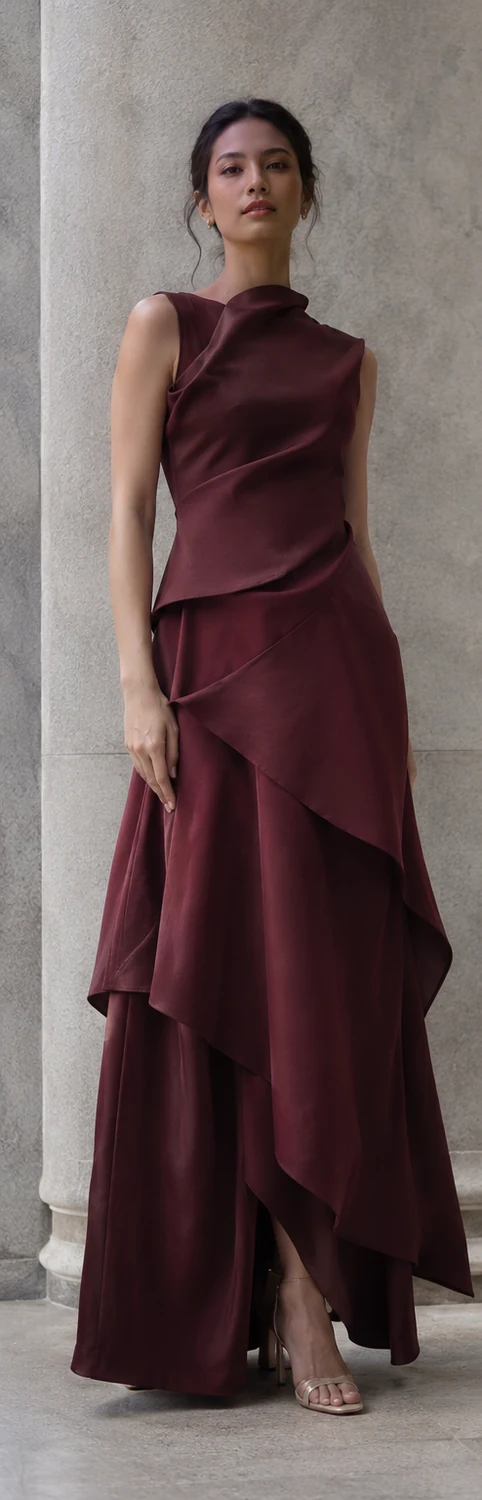
Start with the line, not the trend
A silhouette is the outline a garment creates around the body. A column keeps a relatively continuous line from shoulder to hem; an A-line becomes progressively fuller; a fit-and-flare shape marks the waist before opening outward. None is universally more flattering. The useful question is how the line relates to the wearer’s comfort and preferred proportions.
Draping, pleats and folded fabric change the way a silhouette reads. A diagonal line can create visual movement, while volume concentrated at the shoulder gives a different balance from volume at the skirt. Look at the entire outfit, not an isolated close-up of the neckline.
Look for movement and scale
A still photograph explains shape, but not how fabric behaves in motion. Softer fabrics may collapse closer to the body; firmer constructions may preserve a sculptural outline. Weight, lining and internal support all contribute, so ask for those details rather than inferring them from an image.
Pay attention to where details sit. A dramatic fold positioned too low or too high can change the effect of the design. When reviewing a made-to-measure enquiry, the position of the waist, shoulder point and intended hem are as important as the overall dress length.
Before you make the enquiry
Share your height, intended footwear, occasion and preferred amount of ease. For an asymmetrical or floor-length style, request confirmation of hem placement, lining, closure and any train. Ask which details are adjustable and which are integral to the original design.
The aim is not a universally correct silhouette. It is one that looks intentional and feels possible to wear through the whole occasion.