STUDIO / FIT · THE SAEVIEA JOURNAL
Fit starts before the first fitting
Measurements are a starting point. Ease, posture, footwear and the intended way of wearing a garment complete the picture.
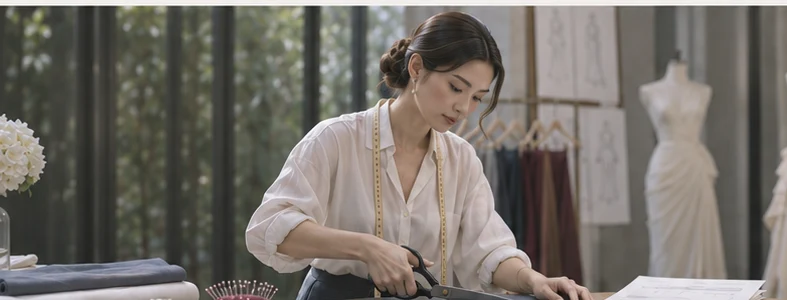
The dimensions that matter
Bust, waist and hip measurements are familiar, but they do not describe the whole figure. Shoulder width, back length, torso proportions, upper-arm room and the height at which the wearer prefers a waist seam can be equally relevant. A dress that meets the numeric measurements may still feel wrong if its internal proportions do not suit the person.
Use a flexible measuring tape kept level, and measure over the undergarments expected for the finished look. It is best to ask the maker for their measurement instructions rather than assuming every studio uses identical reference points.
Ease is intentional, not an error
Ease is the extra room that allows a garment to move and sit as intended. A tailored bodice and a flowing skirt may require very different amounts. Stretch fabrics behave differently from rigid wovens, while a heavily structured neckline depends on stable placement.
It helps to describe the activities you expect: walking, sitting for dinner, dancing, reaching, travel or hours of standing. Functional comfort should be part of the design conversation, particularly for fitted or sculptural pieces.
What to confirm before proceeding
Ask whether a fitting or alteration is included, what happens if measurements change, and which adjustments are possible after cutting. Confirm the intended hem with the exact shoe height, any required undergarments, and the estimated schedule. For commissioned designs, confirm every material and construction detail before payment.
A thoughtful fit process is not about chasing a number. It is about reaching a shared understanding of the shape and experience you want.